Communalism Under Modi's Regime
Author: Dilraj Dhillon
What is Democracy?
Democracy is a system of government in which the people exercise the authority of the government. Some of the pre-requisite criterions that a country should fulfill in order to be called a democracy are;
a) providing basic human rights to all citizens
b) promoting equality among the citizens
c) having a government elected through free and fair elections, where each and every citizens has an equal right to choose its representative
What is Communalism?
Communalism is a theory or system of government according to which each commune is virtually an independent state and the nation is merely a federation of such states. In communalism the problem begins when religion is seen as the basis of the nation. Communal politics is based on the idea that religion is the principal basis of social community. Communalism involves thinking along the following lines. The followers of a particular religion must belong to one community. Their fundamental interests are the same. Any difference that they may have is irrelevant or trivial for community life. It also follows that people who follow different religions cannot belong to the same social community. In its extreme form communalism leads to the belief that people belonging to different religions cannot live as equal citizens within one nation. Either, one of them has to dominate the rest or they have to form different nations.
Rise of Communalism Under Modi's Regime
The BJP led NDA alliance formed the government in India on 26th May, 2014, with Mr. Narendra Modi as the head of the government, holding the position of the Prime Minister of India. The BJP manifesto for 2014 general elections had a very controversial point, which was "Explore all possibilities within constitutional framework to facilitate construction of Ram
Temple in Ayodhya" Though the Ram Mandir case was in the hands of the Supreme Court, which being a part of the judicial system of India, had the sole powers to take a decision upon the case, without the interference of any third party, still the BJP party, through its manifesto, indicated towards the fact that if it comes to power, it will make sure that Ram Mandir is built on the disputed site in Ayodhya. This clearly meant that it was trying to mobilise public support on the basis of religion, thus bringing religion into the political sphere and igniting the rise of communalism in India.
General Summary:
Modi was elected in 2014 on the promise he would bring his “Gujarat model” of high growth rates driven by private-sector-led manufacturing to national prominence.But the Gujarat model also involved the promotion of a vicious right-wing populist politics, which sought to create and elevate a Hindu majority out of a socially and economically diverse population to act as a voting bloc for Modi’s Bharatiya Janata Party (BJP).
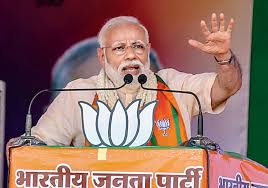
Under Modi’s reign between 2014-2019, India saw a dangerous wave of hyper-nationalism sweep through the country. Critics were branded anti-national. Self-appointed vigilantes lynched Muslim men on mere suspicions of slaughtering cows, held sacred to the Hindu faith. Terms such as “love jihad” were bandied about by fringe Hindu groups with impunity, suggesting that interfaith relationships between Muslim men & Hindu women were in fact a sinister ploy at mass conversion by the minority community. Islamic figures were obliterated from History books, and sadhus, monks & spiritual gurus were enfranchised to a point where the lines between state and church blurred sharply.
The status of communal polarisation during Modi's regime has been worsening since the BJP came into power in 2014. Since the Modi administration first took office, BJP leaders have repeatedly made Hindu nationalist and anti-Muslim remarks in their speeches and interviews. These have, at times, encouraged and even incited violent attacks by party supporters who believe they have political protection and approval. They have beaten Muslim men for dating Hindu women. Mobs affiliated to the BJP have, since 2015, killed and injured scores of members of religious minorities amid rumors that they traded or killed cows for beef. In February 2019, BJP supporters threatened and beat several Kashmiri Muslim students and traders, apparently to avenge a militant attack on a security forces convoy. Government policy has also reflected bias against Muslims. Since October 2018, Indian authorities have deported over a dozen Rohingya Muslims to Myanmar despite the risks to their lives and security. After winning a second term in May 2019, the government revoked the constitutional autonomy of India’s only Muslim-majority state, Jammu and Kashmir, and, anticipating protests, deployed additional troops, detained thousands, and cut off phone and internet connections. The police have failed to intervene when BJP supporters engage in speech inciting violence or mob attacks but are quick to arrest critics of the government. This shows the autocratic and prejudicious of the ruling government, which is totally not acceptable in a democracy like India.
The government’s Hindu nationalist and anti-Muslim policies have touched off protests not just in India but abroad. The government crackdown on the protests in India raised further outcries. The United States, the European Union, and the United Nations secretariat have all called on the Modi government to scrap its discriminatory policies.

Soon after Modi was re-elected as the Prime Minister of India on May 23, he gave a conciliatory speech trying to reassure Muslims. But in the five years of Modi’s first term in power, hate crime against Muslims soared; data shows that some 90% of religious hate crimes in the last decade have occurred since Modi came to power.
During the oath taking ceremony, BJP members started chanting "Jai Shree Ram" as each Muslim Member of Parliament took the sacrosanct oath to serve the people of the country. This clearly proves that these people have become so intolerant towards Muslims that they have no shame in violating the parliamentary code of conduct as well, which they ideally should strictly adhere to considering the fact that they are the ones governing the country. The BJP, has shown clear support to the groups responsible for communal violence. For example, for the past thirty years, the Bajrang Dal has either been banned or has lurked at the margins of Indian society. But in 2014 Narendra Modi, the leader of the Bharatiya Janata Party, or the B.J.P., a right-wing political party that was an offshoot of the R.S.S., was elected Prime Minister. Since then, the militant group has been legitimized and grown exponentially more powerful. In the past seven years, according to Factchecker.in, an organization that tracks hate crimes, there have been a hundred and sixty-eight attacks by Hindu extremists, in the name of protecting cows, against Muslims and other religious minorities. The attacks left forty-six people dead. Paul Richard Brass, a professor emeritus of political science at the University of Washington, has called the Bajrang Dal “a somewhat pathetic but nevertheless dangerous version of the Nazi S.A.”—or the Brownshirts, the Nazi Party’s first paramilitary organization.
The BJP government has truly played a vital role in communalising politics of India and causing widespread communal tensions in the country. It has violated the constitutional framework of India severly and made India vulnerable to criticism by the International community.
The status of communal polarisation during Modi's regime has been worsening since the BJP came into power in 2014. Since the Modi administration first took office, BJP leaders have repeatedly made Hindu nationalist and anti-Muslim remarks in their speeches and interviews. These have, at times, encouraged and even incited violent attacks by party supporters who believe they have political protection and approval. They have beaten Muslim men for dating Hindu women. Mobs affiliated to the BJP have, since 2015, killed and injured scores of members of religious minorities amid rumors that they traded or killed cows for beef. In February 2019, BJP supporters threatened and beat several Kashmiri Muslim students and traders, apparently to avenge a militant attack on a security forces convoy. Government policy has also reflected bias against Muslims. Since October 2018, Indian authorities have deported over a dozen Rohingya Muslims to Myanmar despite the risks to their lives and security. After winning a second term in May 2019, the government revoked the constitutional autonomy of India’s only Muslim-majority state, Jammu and Kashmir, and, anticipating protests, deployed additional troops, detained thousands, and cut off phone and internet connections. The police have failed to intervene when BJP supporters engage in speech inciting violence or mob attacks but are quick to arrest critics of the government. This shows the autocratic and prejudicious of the ruling government, which is totally not acceptable in a democracy like India.
The government’s Hindu nationalist and anti-Muslim policies have touched off protests not just in India but abroad. The government crackdown on the protests in India raised further outcries. The United States, the European Union, and the United Nations secretariat have all called on the Modi government to scrap its discriminatory policies.
Soon after Modi was re-elected as the Prime Minister of India on May 23, he gave a conciliatory speech trying to reassure Muslims. But in the five years of Modi’s first term in power, hate crime against Muslims soared; data shows that some 90% of religious hate crimes in the last decade have occurred since Modi came to power.
During the oath taking ceremony, BJP members started chanting "Jai Shree Ram" as each Muslim Member of Parliament took the sacrosanct oath to serve the people of the country. This clearly proves that these people have become so intolerant towards Muslims that they have no shame in violating the parliamentary code of conduct as well, which they ideally should strictly adhere to considering the fact that they are the ones governing the country. The BJP, has shown clear support to the groups responsible for communal violence. For example, for the past thirty years, the Bajrang Dal has either been banned or has lurked at the margins of Indian society. But in 2014 Narendra Modi, the leader of the Bharatiya Janata Party, or the B.J.P., a right-wing political party that was an offshoot of the R.S.S., was elected Prime Minister. Since then, the militant group has been legitimized and grown exponentially more powerful. In the past seven years, according to Factchecker.in, an organization that tracks hate crimes, there have been a hundred and sixty-eight attacks by Hindu extremists, in the name of protecting cows, against Muslims and other religious minorities. The attacks left forty-six people dead. Paul Richard Brass, a professor emeritus of political science at the University of Washington, has called the Bajrang Dal “a somewhat pathetic but nevertheless dangerous version of the Nazi S.A.”—or the Brownshirts, the Nazi Party’s first paramilitary organization.
The BJP government has truly played a vital role in communalising politics of India and causing widespread communal tensions in the country. It has violated the constitutional framework of India severly and made India vulnerable to criticism by the International community.
Public Remarks Igniting Communal Violence:
- A Karnataka BJP leader Renukacharya gave statements that 'Muslims store weapons in mosques'. he also gave a statement that since Muslims do not support the Citizenship Amendment Act, therefore he would divert the funds earmarked to their welfare to Hindus in his assembly constituency. He also said that he will ignore the minorities and not entertain them if they continue to oppose BJP's policies and programmes. These statements clearly draw antagonism from the society and do ignite feelings of being alienated and discriminated among the minority communities like Muslims, thus leading to communal violence.
- Sadhvi Pragya Thakur, in one of her statements talked about climbing atop the Babri Masjid, (a mosque destroyed by Hindu extremists in 1992 which led to subsequent rioting across the country and killing, by some estimates, 2000 people), to help demolish it and make way for a “grand” Ram Mandir.

- "Purge infiltrators except Buddha, Hindus and Sikhs" This was a proclamation from the country’s second most powerful man Amit Shah, President of the BJP. Though technically aimed at rooting out illegal migrants, the suggestion that people should be expelled on the basis of their religion was evidently an euphemism for hounding out Muslims in particular and other non-Indic religious faiths such as Christians that make up the Indian ethnic tapestry.
- Amit Shah, in an election rally, termed the Muslim migrants coming from Bangladesh as 'termites' and vowed to 'throw them' into the Bay of Bengal.
- UP chief minister, Mr. Yogi Adityanath, gave a statement about Rahul Gandhi filing nomination papers from Wayanad constituency in Kerala, where he said only green flags, symbolising strong presence of Muslims, were seen to be flying. He used the term 'green virus' referring to the Muslim voters being courted by Rahul Gandhi.
- BJP's Maneka Gandhi, while addressing a primarily Muslim gathering gave a statement, "When the election comes and this booth throws up 100 votes or 50 votes, and then you come to me for work we will see,” adding that Muslims who did not vote for her should not expect any help from her, thus attempting to curtail the right to vote of the people attending the rally.
- BJP leader Ranjeet Bahadur Srivastava stated, “the party will bring machines from China to shave 10-12 thousand Muslims and later force them to adopt Hindu religion."
- A Vishwa Hindu Parishad(a subsidiary of BJP) leader Praveen Togadia stated that Muslims should be denied from buying houses in Hindu dominated areas and muslims already staying such areas should be evicted by either forcing the government to make such policies or by forcibly occupying their houses.
- BJP politician Kapil Mishra made controversial remarks about the protests in Delhi by saying, "“DCP is with us. I’m making one thing clear one all our behalf—we will hold our peace until Trump leaves." he also gave the police an ultimatum to clear the streets in three days otherwise he threatened that he, along with his supporters take the matter in hands, clearly exerting prssure on the police and indicating towards the probability of resorting to violent means in response to the protests. This speech incited violence in Northeast Delhi.
Cow Vigilante Violence:
Cow vigilante violence refers to the mob attacks in the name of "cow protection" targeting cow traders. There has been a rise in the number of such incidents of cow vigilantism since the BJP government has come into power in 2014. The surge is attributed to the recent rise of Hindu Nationalism in India. Many vigilante groups say they feel empowered by the victory of the Hindu Nationalist BJP in 2014 election. This feeling of being "empowered" incites great speculation in the minds of people regrading the role of the government in promoting such acts. On 26th May 2015, the Ministry of Environment of the Government of India imposed a ban on sale and purchase of cattle for slaughter, despite the fact that India at that time was one of the largest beef exporter in the world, accounting to 20% of world's beef trade. The BJP without considering the fact that beef export trade contributed a major chunk to the economy of India, imposed this ban. This ban was imposed in a democratic country like India where all citizens have the Right to Freedom, under which ideally, everyone should have a right to eat anything of their choice and practice any occupation, but the BJP clearly violated these guidelines on a large scale, thus ideally being subject to legal proceedings. The BJP attempted to deprive people from practicing their profession of trading beef and attempted to deprive people from consuming meat, a clear infringement to their liberty and Right to Freedom. Fortunately, the Supreme Court of India scrapped off this ban.
This ban was imposed by giving the justification that slaughtering cow was an act of cruelty towards animals, and since the BJP believes in the welfare of animals, thus it was imposing such a ban, but now the question arises that why did the government not take any steps against the ritual of goat sacrifice in numerous Hindu temples. Infact, the state government of Tripura, ruled by BJP, used to offer a goat everyday for carrying out the ritual to the Mata Tripureswari temple in Tripura until the Tripura High Court banned this activity. This behaviour of the BJP is what raises concern in the minds of alot of people that whether it was actually concerned about the cows being slaughtered or it was just to propagate the Hindu philosophy of considering cow as a sacred animal and to deprive the beef eating population from their freedom to eat anything of their choice. This act of BJP was one such act that created a drift between the different religious groups in India. According to IndiaSpend, a data-journalism website, 97% of all cow-vigilante attacks reported since 2010 took place after the Hindu-nationalist Bharatiya Janata Party (BJP) came to power in 2014, with Narendra Modi as prime minister. There have been numerous such verified reports which indicate towards the upsurge in the number of such instances. Mr. Arun Jaitely, in order to deflect all kinds of criticism regarding rising cow vigilantism, gave a statement on behalf of the BJP that their party has zero tolerance towards those involved in such acts. Soon after the statement was made, the BJP was thrown in a quagmire when some BJP politicians publicaly expressed their support towards those involved in violent cow protection acts. The then Minister of State for Civil Aviation, Jayant Sinha was found honouring the 8 Ramgarh mob lynching case convicts with garlands. Mr. Yogi Aditynath in one of his rallies, showed support to the Akhlaq lynching case accused by giving them seats in the front row.

Citizenship Amendment Act and National Register of Citizens:
*This would be discussed exclusively in a separate blog considering it is a major topic to be deliberated upon and has alot of content to discussed*
International Reactions:


- The Wall Street Journal published an article named "Modi courts chaos by snubbing persecuted Muslims" criticising Modi government for its discriminatory behaviour towards Muslims.
- The widely read Time Magazine termed Modi as the "Divider in Chief", referring to the communal polarisation the BJP party was instilling in the Indian society.
- The Washington Post published several critiques and posted a video of the violent police attack on people within the library at Aligarh Muslim University (AMU).
- The US Commission on International Religious Freedom, an official government body, issued a Factsheet on the Citizenship Amendment Act (CAA) that sharply criticised the Modi government.
- In Germany, the popular weekly Der Spiegel ran articles on Modi as a nationalist tackling “200 million enemies” (Muslims); and on the religious bias of his government. The influential Suddeutsche Zeitung published a warning that India’s constitution was at risk.
- In South Africa, the Mail and Guardian, published several negative articles, including “Modi attacks universities”, and another headed “Avoid a Modi authoritarian solution for South Africa”. Yet another, on “Modi’s dangerous game in India” argued that the BJP government had “embarked on a ‘reign of terror’ aimed at sending a stern warning that it would deal with any assertion of their rights with a heavy hand”.
- The Guardian published a long analysis of ‘How Hindu supremacists are tearing Indian apart’, and another on how ‘The violence in Delhi serves Modi’s agenda’.
- The US Commission on International Religious Freedom voiced “grave concern”, and asked the Indian government to protect people, irrespective of their faith. The chairman of the US House of Representatives Foreign Affairs Committee said that he was “deeply troubled” by the communal violence.
- The United Nations High Commissioner for Human Rights said that she was “concerned by reports of police inaction in the face of attacks against Muslims and other groups” in Delhi. That followed her earlier criticism of the conditions imposed in Jammu and Kashmir, and of the CAA. She has now taken the unprecedented step of filing suit against the CAA, an intervention in the Supreme Court.
- Iran’s Foreign Minister condemned “the wave of organised violence against Indian Muslims”, and the Bangladesh government also protested.
- In the US, the prestigious New Yorker magazine published a long interview with an Indian writer who offered a graphic eye-witness account of the riots, and blamed both Hindu extremists and the Modi government.
Communal Violence Incidents:
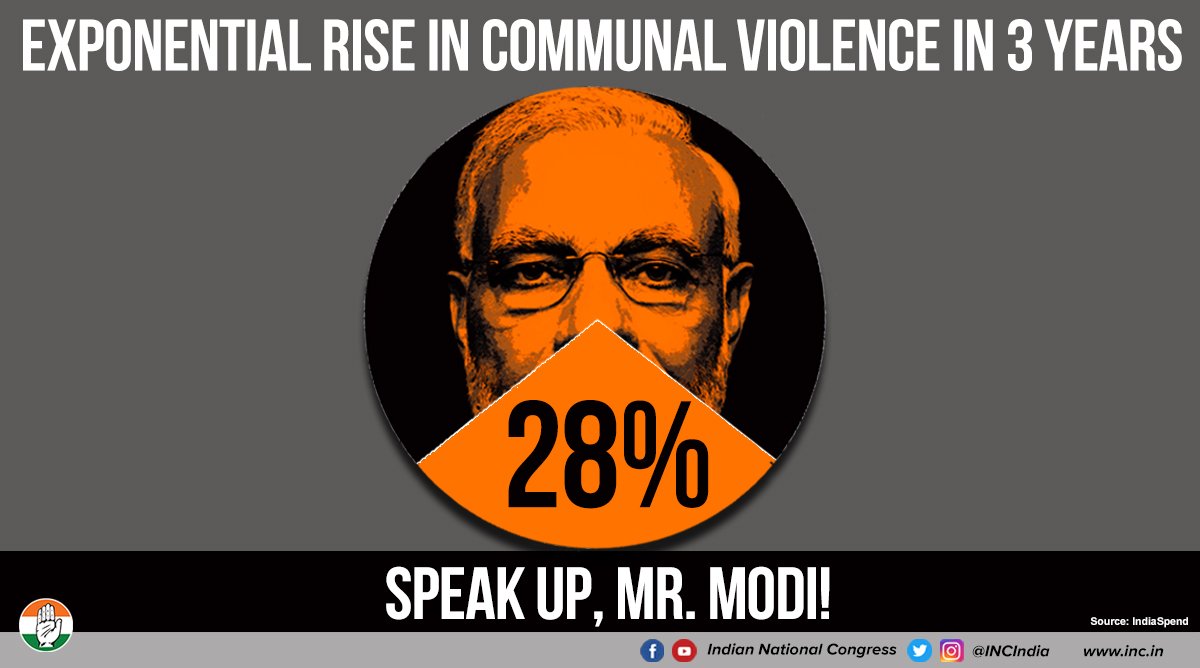
- Communal violence in India had increased by 28% between 2014 and 2017.
- India was ranked fourth in the world in 2015, after Syria, Nigeria and Iraq for the highest social hostilities involving religion
- On 5th January, 2020 a mob of masked men and women, armed with sticks and rods, attacked the students and teachers. The mob allegedly had links with the Akhil Bharatiya Vidyarthi Parishad, the student wing of RSS, which is considered to be in close affiliation with the BJP.
- On 15th December, 2019, police attacked a demonstration at Jamia Milia Islamia University, entered the premises without permission, beat up the students and vandalized the central library. This draws great criticism towards the ruling government considering the fact that Delhi Police comes under the jurisdiction of the Ministry of Home Affairs.
- On 30th January, 2020, a young man calling himself as 'Rambhakt' opened fire at the Shaheen Bagh protesters in order to commemorate the 72nd anniversary of Gandhi's assassination. Videos of the shooting at Jamia Millia Islamia went viral on various social media sites. In them Rambhakt is seen walking and shouting “Jai Shree Ram [a Hindu religious chant], Delhi Police Zindabad [long live Delhi police], I will give you Azaadi [freedom]. Here is your freedom.” About 20 policemen stood watching him, mute spectators. This clearly raises speculation regarding Delhi police's role in the incident, thus indirectly indicating towards the Government's role in the incident.
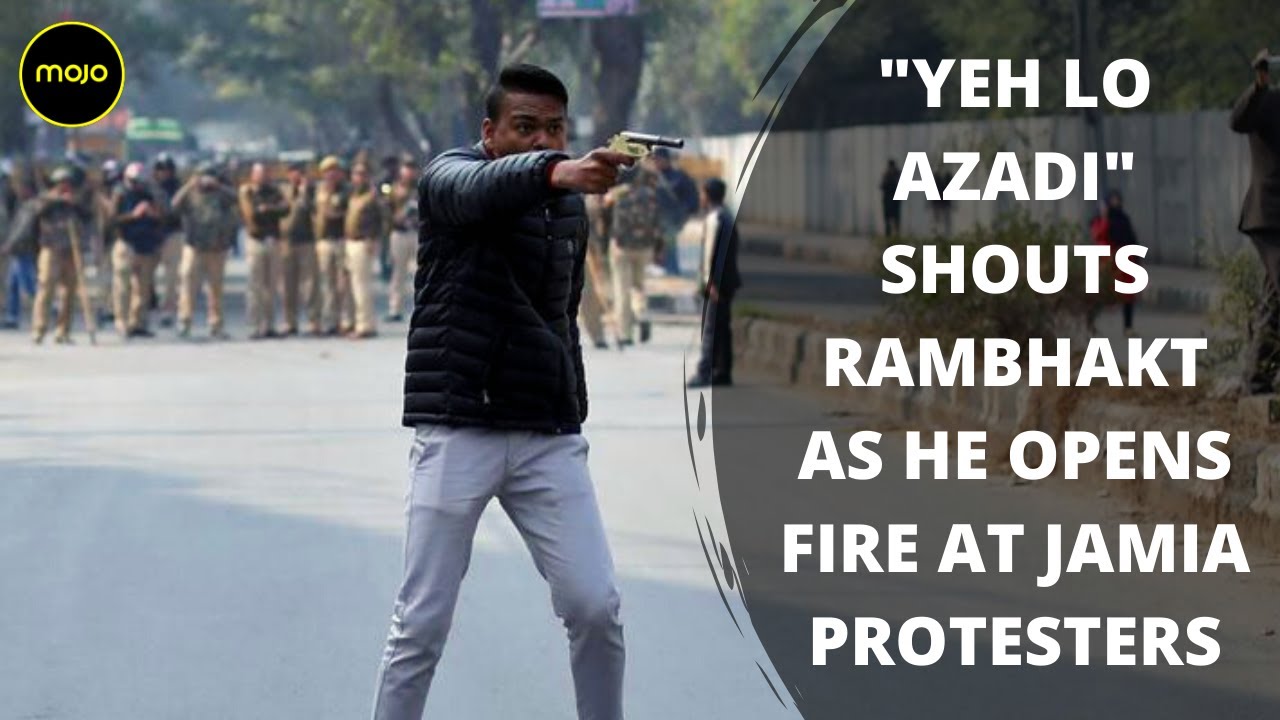
- In response to the discriminatory Citizenship Amendment Act, communal riots erupted in Northeast Delhi, due to which 53 people have died as of now and more than 200 have been injured.
Conclusion:
It is my humble request to not be enraged by reading this article or feel targeted, because the sole intention to write this article is to make the readers aware about the current scenario and to inculcate a spirit of brotherhood a secularism in the society. We need to understand the fact that politics and religion are two separate things and should never merged together. We need to understand that the sole motive of politicians who bring religion into the political arena is to gather votes on the basis of religion and in order to fulfill that, they tweak the essence and ideology of a religion. They try to propagate tensions in the society by exploiting the immense faith people have in the religion they follow, just for their personal motives. We need to bring about the a change in the current political status quo, so that people of all religions can live together in one society and profess peace and harmony, thus living up to the essence of the Constitution of India.
If you have any feedbacks or any queries, please do express them in the comments section.
Thank you.

This comment has been removed by a blog administrator.
ReplyDeleteTrue facts.. God bless you
ReplyDeleteTrue picture of today's destruction of secularism. Well done. Keep growing
ReplyDeleteVery nice facts and thoughts.keep writing.well done. God bless you.
ReplyDeleteThat was something good. Do try to have an optimum space for other protagonists on the scene and have a un biased version. Nevertheless well done.
ReplyDeleteThank you so much! Will surely consider that for upcoming blogs!
DeleteWell clearly a very leftish opinion
ReplyDelete